

About Roos Instruments
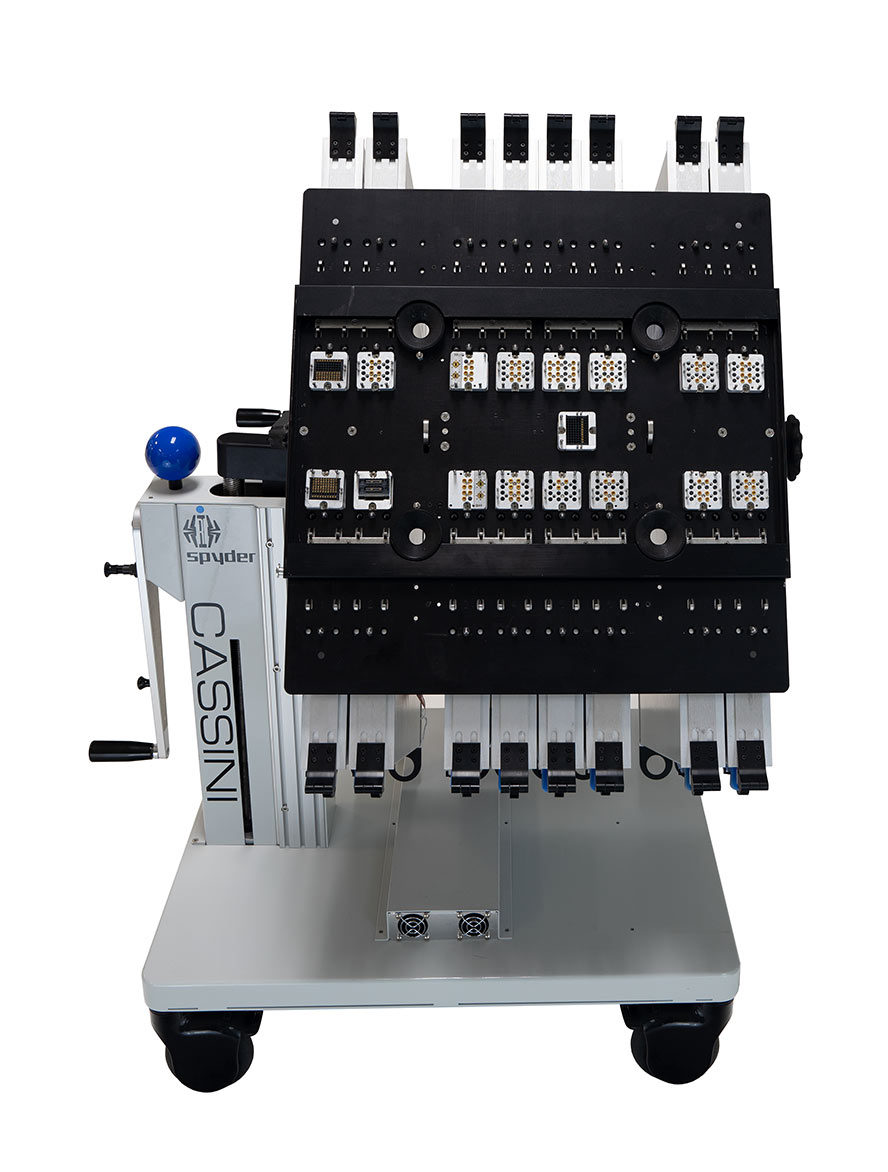
Roos Instruments integrates over 30 years of research into our ATE systems. We designed the Cassini platform to be modular from the ground up so that it can be reconfigured for any new device or test plan, no matter how advanced. Its streamlined design gives Cassini the purest test signals in the industry and pinpoint accuracy from DC to 86 GHz and beyond. Cassini’s software is intuitive enough to save months in test development and time-to market, yet powerful enough for fast and accurate testing of the world's most advanced high-frequency technology.
The RI Story
- Founded in 1989 to make Cost Effective T/R Module Production Test a Reality
- Goal of Reducing Hours of Testing to Only Minutes or Less
- Won Long Term Major Military Radar Program Business
- Helped Enable the Commercial RF IC Market Growth
- 90% Employee Retainment for Over 20 Years
- 30 Years as a California "C" Corporation
- Fully Employee Owned
- Outside Auditing
- Profitable
Cassini Spyder
Cassini 16
Products and Services
- Cassini Modular Automated Test Equipment (ATE)
- RI System Software
- Test Plan Builder (GUI + code)
- Universal Handler and Prober Support
- Virtual Workstation (Offline Development)
- Guru Apps & RITdb
- Guru Server
- Production Workflow and Test Data Distribution
- Backup and Security
- Immutable Distrdibuted Filesystem
- Production Services
- Handler and Wafer Probe Interface
- Custom Fixtures and DUT Interfaces
Typical RI Customers
- Independent Device Manufacturers (IDMs)
- Increase test engineers' productivity with Cassini's record low cost of test.
- Test Houses and Subcontractors
- Remote development and fully error corrected hardware for simple correlation across the globe.
- Fabless companies
- A fully integrated solution to your test needs. Expert training and turn-key engineering solutions for cutting edge technology.
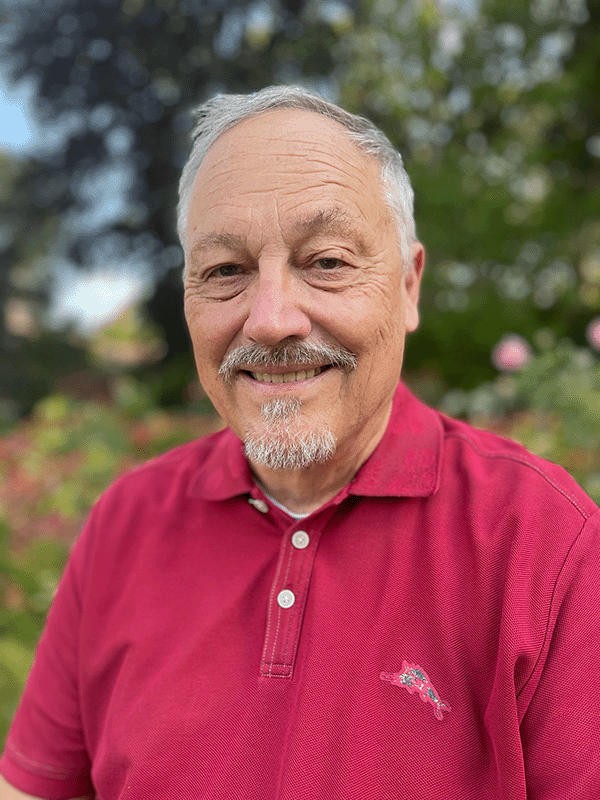
Mark Roos
CEO
Corporate History
Roos Instruments, Inc. was founded in 1989 by a group of RF Microwave engineers, out of the bench-top test equipment industry, to create an automated microwave test system using a fundamentally new approach. The concept was to combine a personal computer and object oriented software technology with high speed microwave measurement technology, creating the world's first true Microwave ATE system. A true ATEsystem is one that is designed with the sole purpose of testing parts at the highest throughput possible while operating in all types of environmental conditions anywhere in the world. The goal was to deliver a turnkey test solution with an order of magnitude higher throughput.
The US military was in the midst of a large Manufacturing Technology research and development effort (the DOD ManTechprogram), looking for novel approaches to speed the production of microwave hardware while lowering the cost. RI was awarded a grant to prototype and demonstrate our Microwave ATE concepts. Under the leadership and vision of it's founder Mark Roos, a 10 to 100 times improvement in test throughput was demonstrated, which lead to a firm contract to produce a marketable product. This first product addressed the X and Ku band interests for the military radar market covering the 100 MHz to 20 GHz range. The direction and funding of the Man Tech program allowed Roos Instruments to be born without the need for venture capital funding and is still today internally funded as well as employee owned and operated.
Mark Roos is the founder and CEO of Roos Instruments, a position he has held since its inception in 1989. Mark graduated from California State Polytechnic University with a B.S. in Electrical Engineering in 1973, holds a MSin Electrical Engineering from Stanford University, and an MBAfrom Santa Clara University.
Measurement technology has been the focus of his entire career starting with his early work experience as R&D Project Leader for Hewlett-Packard (later Agilent) Network Measurements Division in Santa Rosa where he was responsible for the microwave receiver and processing (i.e. "bottom box") of the record-breaking HP 8510 Microwave Network Analyzer. After the enormous success of that network analyzer, Mark went on to lead the marketing efforts for HP's RF and Scalar Microwave Network Analyzer products. The next phase of Mark's career was VP of Engineering for EIP Microwave, a maker of electronic counters and other instrumentation. While at EIP, he discovered a need for high performance automated instruments. He left EIP to found Roos Instruments to serve this market for high-speed RF instrumentation with capabilities suitable for high volume manufacturing.
Early on, Roos Instruments received funding from DARPA via a SBIRgrant. The initial funding allowed Roos Instruments to develop a totally new approach to RF measurements using a single receiver and advanced software -- ideas Mark pioneered. Early in 1994, Roos Instruments won a comprehensive benchmark at Motorola with the RI7100A, resulting in its first major success. Thus began Roos Instruments' rise as the supplier of these advanced technologies in production testers world-wide.
Green Initative
Roos Instruments' commitment to corporate social responsibility leads the industry
with 100% renewable energy, commitment to reclaim and recycle all RI equipment, and a commitment to
reduce and reuse office resources. We also adopt the Responsible Business Alliance's Code of
Conduct.
Learn More »
Privacy
The privacy and protection of your personal and financial information is important to
us. We will never sell any information gathered about you. We use your personal information for the
RI Kit ordering process.
Learn More »
RTalk - Smalltalk 'Live' Environment on the JVM
RI Smalltalk developers are developing apps that can run within the Java virtual machine. "RTalk" provides a Smalltalk compatible emulation layer that implements a dynamic language on the JVM.
-
"Live" Smalltalk Environment on JVM presentation by Mark Roos at the JVM Language Summit 2012
-
Smalltalk Dynamic Lanugage on JVM at the JVM Language Summit 2011